
Disclosure: RestaurantLaunchpad.io is reader-supported. We may earn a commission if you buy through links on our site.
By Marcus Rivera | June 20, 2026 | How We Evaluate
Quick Answer: Opening a Vietnamese restaurant in 2026 requires $80,000–$350,000 in startup capital, a solid business plan, the right location, commercial kitchen equipment (especially large pho stock pots and steam tables), and a menu anchored by crowd favorites like pho, banh mi, and spring rolls. Most Vietnamese restaurants become profitable within 18–30 months with strong execution.
Why Open a Vietnamese Restaurant in 2026?
Vietnamese cuisine has exploded from a niche ethnic food into mainstream American dining — and the numbers back it up. Pho restaurants alone grew by over 30% across the U.S. between 2019 and 2025, and banh mi shops are now staples in cities and suburbs alike. Bun bo Hue, com tam (broken rice), and banh xeo (sizzling crepes) are drawing food-curious diners who’ve moved well beyond pho.
Here’s why the timing is excellent for entrepreneurs:
- Low food cost ratio: Vietnamese cuisine relies heavily on herbs, rice noodles, and broth-based dishes — keeping food costs in the 28–33% range, which is favorable for restaurants.
- Fast casual appeal: Dishes like banh mi and vermicelli bowls are fast to prepare and easy to scale, making Vietnamese concepts ideal for fast-casual formats.
- Health-forward reputation: Diners perceive Vietnamese food as fresh, light, and nutritious — a selling point in today’s health-conscious market.
- Underserved markets: Many mid-sized cities and suburban areas still lack quality Vietnamese restaurants, presenting a first-mover opportunity.
Step-by-Step Guide to Opening a Vietnamese Restaurant
Step 1: Define Your Concept and Menu
Vietnamese dining spans several concepts. Choose one that fits your target market, budget, and culinary expertise:
- Traditional sit-down: Full service with a comprehensive menu including pho, bun bo Hue, com tam, and appetizers.
- Fast casual pho bar: Assembly-line ordering with a focused menu — pho, spring rolls, drinks.
- Banh mi and bowl shop: Sandwich-focused with add-on vermicelli bowls and fresh rolls. High throughput, lower ticket average.
- Modern Vietnamese fusion: Elevated presentations of Vietnamese classics, often in a trendy bar-restaurant hybrid.
Your concept determines everything downstream — your location search, equipment needs, staffing model, and marketing angle.
Step 2: Write Your Business Plan
A solid business plan is essential for securing financing and staying on track. Include:
- Executive summary and concept overview
- Market analysis (local competition, target demographic)
- Menu and pricing strategy
- Startup cost breakdown and funding sources
- Revenue projections (Year 1–3)
- Operational plan (hours, staffing, suppliers)
- Marketing strategy
See our full guide on how to open a restaurant for a comprehensive business plan template that applies to any cuisine.
Step 3: Find the Right Location
Location is critical for any restaurant, but especially for a Vietnamese concept competing in a growing market. Look for:
- High foot traffic or visibility: Strip malls with anchor tenants, busy streets, or downtown corridors work well.
- Proximity to the Vietnamese community: If your city has a Vietnamese neighborhood or “Little Saigon,” consider whether you want to compete there or serve an underserved area.
- Appropriate size: A fast-casual concept can operate in 800–1,200 sq ft; a full-service restaurant typically needs 1,500–2,500 sq ft.
- Grease trap and ventilation: Pho broth requires extended simmering. Ensure the space has or can accommodate commercial kitchen ventilation and grease traps.
Step 4: Secure Licenses and Permits
Vietnamese restaurants require the same permits as any food service business. Expect to obtain:
- Business license (city/county)
- Food service establishment permit
- Food handler certifications (for owner and staff)
- Seller’s permit / sales tax license
- Liquor license (if serving alcohol — boba or Vietnamese iced coffee shops often skip this)
- Certificate of occupancy
- Health department inspection clearance
- Sign permit
- Building permits (if doing renovations)
Budget $2,000–$15,000 for permits and licensing, depending on your state and whether you’re adding a liquor license.
Step 5: Equip Your Kitchen
Vietnamese cooking demands specialized equipment. Your kitchen must handle large-batch pho broth simmering (12–24 hours), high-volume rice cooking, and quick-fire wok cooking. See our complete restaurant kitchen equipment list for a full breakdown of commercial kitchen essentials.
Key equipment for a Vietnamese restaurant:
- Commercial stock pots (60–80 qt): For simmering pho broth — you’ll likely need 2–4 pots running simultaneously during prep.
- Commercial rice cooker: High-capacity models (40–60 cup uncooked) for continuous service.
- Commercial wok range: High BTU burners (160,000–200,000 BTU) for stir-fry dishes.
- Steam table / hot well: Keeps broth, meats, and side dishes at service temperature.
- Prep tables and refrigeration: Walk-in cooler essential for fresh herbs, meats, and produce.
- Noodle cooker / pasta cooker: For blanching rice noodles (banh pho) quickly during service.
- Commercial dishwasher: High-temp pass-through model for fast bowl and utensil turnover.
Step 6: Hire and Train Your Staff
For an initial opening, a Vietnamese restaurant typically needs:
- 1 head chef or lead cook (Vietnamese cuisine experience strongly preferred)
- 1–2 line cooks
- 1–2 prep cooks
- 3–5 front-of-house staff (servers, cashier, food runners)
- 1 manager (can be the owner initially)
Training is critical. Your staff must be able to explain dishes to unfamiliar guests, pronounce them correctly, and describe ingredients for allergy concerns. Prepare a staff training guide covering the full menu.
Step 7: Launch Your Marketing
Pre-opening buzz is everything. Start marketing 4–6 weeks before launch:
- Set up Google Business Profile and populate it fully
- Build an Instagram account showcasing food photography
- Partner with local food bloggers and influencers for a soft-launch preview
- Offer a grand opening promotion (free spring rolls, discounted pho bowls)
- Register on Yelp, TripAdvisor, and DoorDash/Uber Eats from day one
Vietnamese Restaurant Startup Costs
Here’s a realistic breakdown of what to expect when opening a Vietnamese restaurant in 2026:
| Expense Category | Low Estimate | High Estimate | Notes |
|---|---|---|---|
| Lease deposit + first/last month | $5,000 | $30,000 | Varies heavily by city and sq ft |
| Renovation / build-out | $20,000 | $150,000 | Higher for full custom kitchens |
| Kitchen equipment | $15,000 | $60,000 | Used equipment reduces this significantly |
| Furniture and décor | $5,000 | $30,000 | Vietnamese aesthetic — minimal to elaborate |
| Licenses and permits | $2,000 | $15,000 | Liquor license adds cost |
| Initial food and supply inventory | $3,000 | $10,000 | Specialty imports can increase this |
| POS system and tech | $1,500 | $5,000 | Toast, Square, or Lightspeed |
| Marketing and branding | $2,000 | $15,000 | Logo, website, social, print |
| Working capital (3 months) | $15,000 | $50,000 | Covers payroll, rent, supplies |
| Total Estimated Range | $68,500 | $365,000 |
Most Vietnamese restaurant owners report spending $100,000–$200,000 to open a full-service concept from scratch.
Menu Planning for Your Vietnamese Restaurant
A well-designed menu balances authenticity with accessibility. Here’s a starting framework:
Core Menu Items to Include
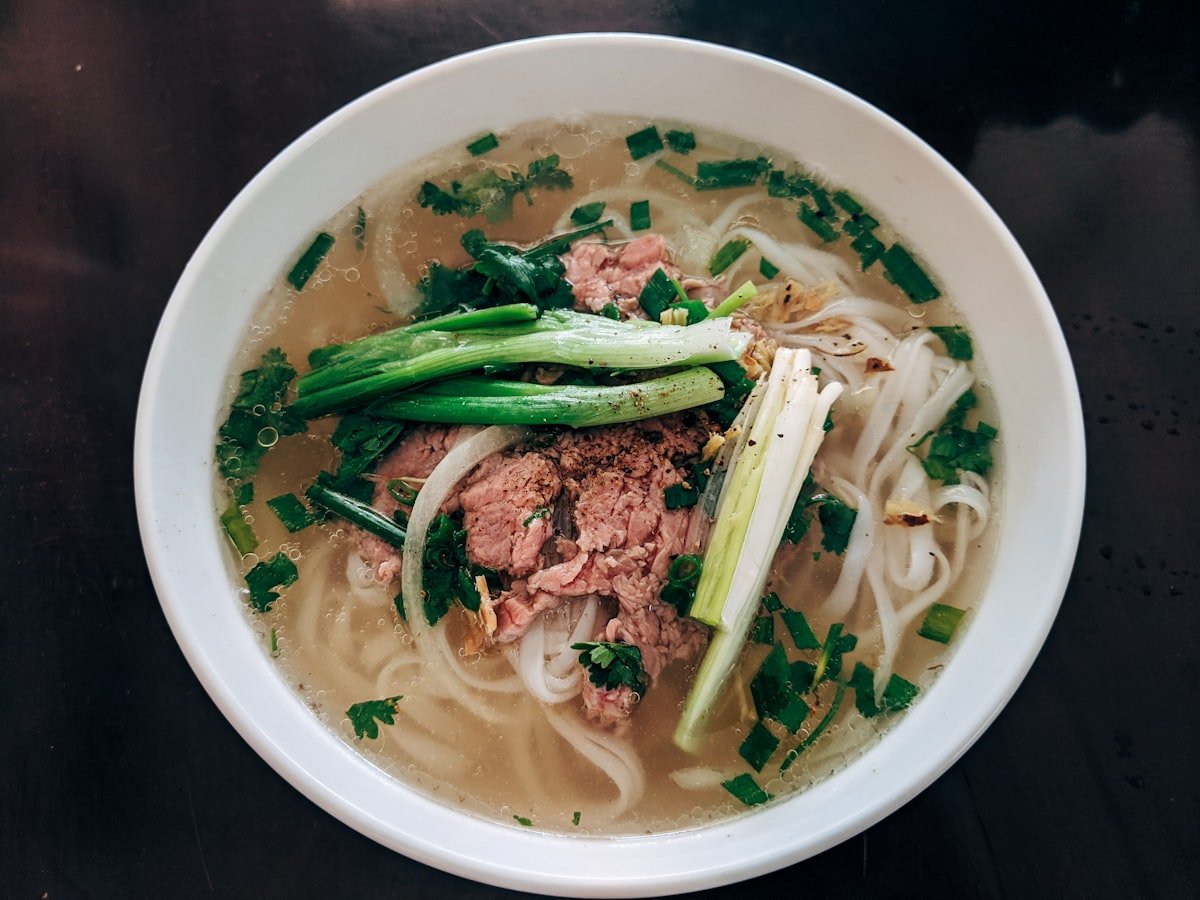
- Pho: Your anchor dish. Offer at minimum pho bo (beef) with rare steak, brisket, and tendon, plus pho ga (chicken) for lighter eaters. Price: $14–$22.
- Banh Mi: Vietnamese baguette sandwiches with pâté, pickled daikon/carrots, jalapeño, and cilantro. Grilled pork, lemongrass chicken, or tofu options. Price: $8–$14.
- Spring Rolls (Goi Cuon): Fresh rice paper rolls with shrimp, pork, herbs, and rice noodles. Served cold with hoisin-peanut dipping sauce. Excellent profit margin. Price: $7–$12.
- Vermicelli Bowls (Bun): Cold rice noodle bowls topped with grilled pork, chicken, or shrimp, fresh herbs, bean sprouts, and nuoc cham. Popular with health-conscious diners. Price: $13–$18.
- Bun Bo Hue: Spicy lemongrass beef noodle soup — great for diners seeking something beyond pho. Price: $15–$22.
- Egg Rolls (Cha Gio): Fried pork and vegetable rolls — crowd pleaser and appetizer upsell.
- Vietnamese Iced Coffee (Ca Phe Sua Da): Strong drip coffee over condensed milk and ice. High margin, culturally iconic beverage.
Pricing Strategy
Aim for a food cost of 28–33%. Factor in labor-intensive items like pho (long broth simmering time) when setting prices. Don’t underprice — Vietnamese cuisine has shed its “cheap ethnic food” stigma, and quality restaurants command premium prices.
Staffing Your Vietnamese Restaurant
The trickiest staffing challenge for Vietnamese restaurants is finding kitchen staff who understand the cuisine. Options:
- Hire experienced Vietnamese cooks: Recruit from Vietnamese community networks, ethnic culinary schools, or referrals from suppliers.
- Train non-Vietnamese cooks: With the right recipes, standardized processes, and a strong head chef, any skilled cook can execute Vietnamese dishes.
- Owner-operator model: Many successful Vietnamese restaurants are family-run with the owner cooking. This works well for small concepts but limits scalability.
Plan for a labor cost of 28–35% of revenue in your first year. This often runs high early — it normalizes as volume increases.
Marketing Your Vietnamese Restaurant
Beyond the basics, these tactics work particularly well for Vietnamese restaurants:
- Pho day promotions: Many Vietnamese restaurants run discounts on Pho Day (November 12th in the U.S.) — great PR and social media fodder.
- Behind-the-scenes content: Video of your pho broth simmering overnight, showing the craft, performs well on Instagram Reels and TikTok.
- Tet (Vietnamese New Year) events: Host a special menu around the Lunar New Year in January/February. Draws Vietnamese diaspora and curious non-Vietnamese customers alike.
- Loyalty program: A stamp card or app-based loyalty program drives repeat visits — critical for a noodle soup restaurant where frequency is the profit driver.
- Google Reviews: Actively encourage satisfied customers to leave reviews. “Best pho in [city]” is a common search — you want to rank for it.
Also see our guide on restaurant marketing ideas for a full playbook of strategies that work across concepts.
Common Mistakes to Avoid
- Skimping on pho broth quality: Customers can tell the difference between a 4-hour and a 12-hour broth. Don’t cut corners on your signature dish.
- Over-expanding the menu too early: Start with a tightly focused menu of 15–20 items. You can expand after you’ve nailed operations.
- Underestimating herb and produce spoilage: Vietnamese cuisine uses massive amounts of fresh herbs (Thai basil, cilantro, bean sprouts). Tightly manage your ordering cycle and build supplier relationships.
- Ignoring allergens: Fish sauce, peanuts, and shellfish are common in Vietnamese cooking. Train all staff to handle allergy inquiries and have allergen-free alternatives ready.
- Choosing the wrong location for the concept: A traditional full-service Vietnamese restaurant will struggle in an area with no exposure to Vietnamese food. Know your market before signing a lease.
- Underfunding working capital: Many new restaurants fail in months 2–6 because they spent everything on build-out and have no cash cushion. Maintain 3 months of operating expenses in reserve.
Frequently Asked Questions
How much does it cost to open a Vietnamese restaurant?
Expect to invest $80,000–$350,000 depending on your city, the size of the space, and whether you’re doing a fast-casual or full-service concept. A small pho shop in a lower-cost market can open for under $100K; a full-service concept in a major city may exceed $300K.
Do I need to be Vietnamese to open a Vietnamese restaurant?
No — but you need to deeply understand and respect the cuisine. The best non-Vietnamese operators invest heavily in learning from authentic sources: Vietnamese cooks, cookbooks, and travel to Vietnam if possible. Authenticity matters to customers, especially in diverse markets.
What’s the most profitable item on a Vietnamese menu?
Vietnamese iced coffee (ca phe sua da) and fresh spring rolls (goi cuon) typically have the highest profit margins. Pho is your volume driver but has higher labor costs due to broth preparation time.
How long does it take to open a Vietnamese restaurant?
From signing a lease to opening day, plan for 4–8 months. Build-out, permitting, and equipment procurement are the biggest time variables. In major cities, permitting alone can add 2–3 months.
What licenses do I need to open a Vietnamese restaurant?
At minimum: business license, food service establishment permit, food handler certifications, and a certificate of occupancy. Add a liquor/beer-wine license if you plan to serve alcohol. Requirements vary by state and city.
Is a Vietnamese restaurant a good investment?
Yes, if you execute well. Vietnamese restaurants benefit from lower food costs than many other cuisines, strong cultural interest from diners, and a fast-casual model that scales efficiently. The key risks are location, competition from established operators, and finding qualified kitchen staff.