
Disclosure: RestaurantLaunchpad.io is reader-supported. We may earn a commission if you buy through our links, at no extra cost to you.
By Marcus Rivera | June 18, 2026 | How We Evaluate
Quick Answer: Opening a Korean restaurant in 2026 costs $150,000–$450,000, takes 9–18 months, and requires a strong grasp of Korean culinary traditions, specialty equipment (tabletop grills for KBBQ), and a clear concept. Korean cuisine is booming in the U.S. — driven by K-pop culture, Korean BBQ’s social appeal, and growing mainstream awareness of dishes like bibimbap, tteokbokki, and Korean fried chicken.
Korean food is having a cultural moment. What was once a niche cuisine is now firmly mainstream — fueled by the global rise of K-pop, Korean dramas, and social media food content. Korean BBQ alone has become one of the most sought-after dining experiences in major U.S. cities, and even in smaller markets, Korean restaurants are thriving.
If you’re serious about learning how to open a Korean restaurant, this guide covers everything: concept planning, startup costs, equipment needs, staffing, licensing, and marketing.
Step 1: Choose Your Korean Restaurant Concept
Korean cuisine has incredible variety. Your concept shapes everything — from your equipment needs to your hiring strategy to your target customer. Here are the most viable Korean restaurant formats:
| Concept | Average Check | Key Features | Startup Complexity |
|---|---|---|---|
| Korean BBQ (KBBQ) | $35–$70/person | Tabletop grills, ventilation, banchan | High |
| Korean Fried Chicken | $15–$30 | High-output fryers, delivery-friendly | Low-Medium |
| Casual Korean (Bibimbap/Bowls) | $12–$22 | Fast service, accessible menu | Low-Medium |
| Korean Soup & Stew | $15–$28 | Stone pot (dolsot) service, broth mastery | Medium |
| Korean Fusion | $20–$45 | Creative dishes, bar program | Medium-High |
| Pojangmacha (Korean Street Food) | $10–$20 | Tteokbokki, hotteok, kimbap | Low |
Korean BBQ is the most profitable concept per customer — but also the most capital-intensive due to ventilation systems and tabletop grill installation. Korean fried chicken shops can be opened for as little as $80,000–$150,000 and are very delivery-friendly.
Step 2: Develop a Business Plan
A solid business plan guides your decisions and attracts investors or lenders. Key sections include:
- Concept Overview: What type of Korean restaurant, what makes you different
- Market Analysis: Local Korean population, K-pop culture influence, competitor landscape
- Financial Projections: Revenue forecasts, cost structure, break-even timeline
- Operations Plan: Kitchen layout, hours, delivery strategy
- Funding Sources: Personal equity, SBA loans, investors
Start with our guide on how to open a restaurant for a framework you can adapt to Korean cuisine specifically. Also review detailed cost projections in our restaurant startup cost guide.
Step 3: Budget for Startup Costs
Korean restaurant startup costs vary significantly by concept. Here’s a realistic breakdown:
| Expense Category | KBBQ Restaurant | Korean Fried Chicken | Casual Korean |
|---|---|---|---|
| Lease deposit + first months | $20,000–$60,000 | $8,000–$25,000 | $12,000–$40,000 |
| Renovation & build-out | $80,000–$200,000 | $20,000–$60,000 | $30,000–$100,000 |
| Kitchen equipment | $50,000–$120,000 | $20,000–$50,000 | $25,000–$70,000 |
| Ventilation (KBBQ) | $30,000–$80,000 | N/A | N/A |
| Tabletop grills (KBBQ) | $15,000–$40,000 | N/A | N/A |
| Licenses & permits | $3,000–$10,000 | $2,000–$6,000 | $2,000–$8,000 |
| Initial inventory | $8,000–$25,000 | $4,000–$12,000 | $5,000–$15,000 |
| Working capital (3–6 months) | $30,000–$80,000 | $15,000–$40,000 | $20,000–$60,000 |
| Estimated Total | $236,000–$615,000 | $69,000–$193,000 | $94,000–$293,000 |
Step 4: Find the Right Location
Location strategy for Korean restaurants varies by concept:
KBBQ Restaurants: Need larger spaces (2,000–5,000 sq ft) with industrial-grade ventilation. Look for spaces in Asian food corridors, entertainment districts, or near universities. Korean BBQ thrives in social, nightlife-adjacent areas.
Korean Fried Chicken: Can operate in smaller footprints (500–1,500 sq ft). Ghost kitchen or delivery-first models work very well — the food travels excellently.
Casual Korean: Downtown lunch spots, food halls, or near office parks work well. Bibimbap bowls and Korean rice dishes appeal to the health-conscious lunch crowd.
Step 5: Navigate Permits and Licensing
You’ll need standard restaurant permits plus some KBBQ-specific requirements:
- Business license and fictitious name registration
- Food handler’s permits for all kitchen staff
- Health department inspection certificate
- Fire department permit (especially important for KBBQ tabletop grills)
- Gas permit (for gas-fueled tabletop grills)
- Liquor license (for soju, Korean beer, makgeolli)
- Building permits for ventilation modifications
KBBQ restaurants face the most regulatory scrutiny due to open-flame grills at tables. Some jurisdictions require special fire suppression systems above each table. Budget extra time and money for these inspections. Read our full permits and licenses guide for state-by-state details.
Step 6: Set Up Your Kitchen and Dining Room
KBBQ Kitchen & Dining Requirements
Korean BBQ restaurants have unique infrastructure needs that set them apart from most restaurant concepts:
Ventilation System: The most critical — and most expensive — element of a KBBQ build-out. Every table needs a downdraft or overhead vent hood connected to the exhaust system. This typically costs $30,000–$80,000 depending on the number of tables and local code requirements.
Tabletop Grills: Commercial tabletop grills are available in gas (charcoal-style flavor), electric, and infrared models. Gas units ($800–$2,000 per table) are most popular for flavor authenticity.
Kitchen Equipment: Beyond the tabletop grills, a KBBQ kitchen needs commercial refrigeration for marinated meats, a prep area for banchan (the essential Korean side dishes), rice cookers, and steamers.
Other Korean Concepts
For Korean fried chicken, your primary investment is in high-output commercial fryers. See our guide to best commercial fryers for restaurants for recommendations. Korean soups and stews require stone pot (dolsot) inventory, commercial stockpots, and burner stations.
Check our restaurant kitchen equipment list for a comprehensive breakdown of what every commercial kitchen needs.
Step 7: Source Korean Ingredients
Authentic Korean cuisine requires specialty ingredients that may not be available from mainstream food distributors. Here’s what to source and where:
Essential Korean Pantry Staples
- Gochugaru (Korean red pepper flakes): The backbone of kimchi, tteokbokki, and marinades. Source in bulk from Korean wholesale distributors.
- Gochujang (Korean chili paste): A fermented paste used in marinades, sauces, and stews. CJ Foods and Sempio are the primary commercial brands.
- Doenjang (fermented soybean paste): Korean equivalent of miso — essential for doenjang jjigae and numerous marinades.
- Sesame oil and sesame seeds: Used heavily as finishing flavors across Korean cuisine.
- Short-grain rice: Same as Japanese cuisine — source domestic Calrose or imported Korean varieties.
- Premium beef cuts: For KBBQ — galbi (short ribs), bulgogi (ribeye), and samgyeopsal (pork belly) are staple meats.
- Kimchi: Either make in-house or source from a Korean food distributor. House-made kimchi is a major differentiator.
Connect with Korean food distributors like Hanahreum USA, KoMart, or H Mart wholesale for bulk ingredient sourcing.
Step 8: Build Your Team
Staffing a Korean restaurant requires a mix of culinary expertise and cultural knowledge:
- Head Chef: Expertise in Korean cuisine is essential — particularly for authentic fermented preparations like kimchi. Budget $55,000–$100,000 annually.
- KBBQ Grill Staff: In upscale KBBQ, servers manage the grilling tableside — this is both a service skill and a safety requirement. Train thoroughly.
- Kitchen Staff: Prep cooks skilled in banchan production (a KBBQ restaurant may serve 6–12 banchan dishes that all need daily preparation)
- Front of House: Hire staff familiar with Korean dining culture. The pace, ordering style, and table management differ significantly from Western dining.
Labor costs for KBBQ typically run 28–35%. Korean fried chicken and fast-casual concepts can operate at 22–28%.
Step 9: Design a Winning Menu
A focused menu beats a sprawling one. For a first-year Korean restaurant, consider:
Core Menu Sections by Concept
KBBQ Menu: Meat selections (beef, pork, chicken tiers), banchan sides, rice and noodle dishes, soups (kimchi jjigae, doenjang jjigae), and drinks (soju, Korean beer, makgeolli).
Korean Fried Chicken Menu: Classic and sauced chicken (yangnyeom, soy garlic, honey butter), tteokbokki, corn dogs, kimchi fried rice, Korean drinks.
Casual Korean Menu: Bibimbap variations, rice bowls (donburi-style), japchae, kimbap rolls, soups, and Korean sides.
Price your menu with food cost percentage targets of 28–35% for KBBQ (given premium beef costs) and 25–32% for other concepts.
Step 10: Technology and Operations
Your tech stack should include:
- Restaurant POS: Choose a system that handles table management, split bills, and delivery integration. See our best restaurant POS systems guide for top picks in 2026.
- Online ordering: Korean fried chicken concepts should prioritize delivery integrations (DoorDash, Uber Eats, GrubHub).
- Reservation management: Resy or OpenTable for KBBQ — people plan ahead for Korean BBQ nights out.
- Inventory tracking: Track perishable marinated meats and daily banchan production carefully.
Step 11: Market Your Korean Restaurant
Korean restaurants have a built-in marketing asset: the experience itself is highly visual and social.
- TikTok and Instagram: KBBQ sizzling on the grill, fire and smoke, colorful banchan spreads — this content practically creates itself. Prioritize short video content.
- K-pop & Korean culture tie-ins: Lean into the cultural moment. Decorate with subtle Korean cultural references and promote around K-drama or K-pop release events.
- Google Maps: Optimize for “Korean BBQ near me” and “KBBQ [city]” searches — these have enormous local search volume.
- Community outreach: Connect with local Korean-American communities, cultural organizations, and churches — they’re your most powerful early advocates.
Profitability and Insurance
KBBQ restaurants with strong execution can achieve 12–20% net profit margins — above the industry average — because of the high per-table revenue. Korean fried chicken concepts with strong delivery revenue can hit 15–25% margins due to lower labor costs.
Don’t forget restaurant insurance — especially critical for KBBQ operations where open-flame tabletop grills increase liability exposure. General liability, property, and workers’ compensation are all essential. Review restaurant profit margins to build realistic financial targets.
Common Mistakes to Avoid
- Underestimating ventilation costs for KBBQ: This is the #1 budget buster for KBBQ operators. Get multiple contractor quotes early.
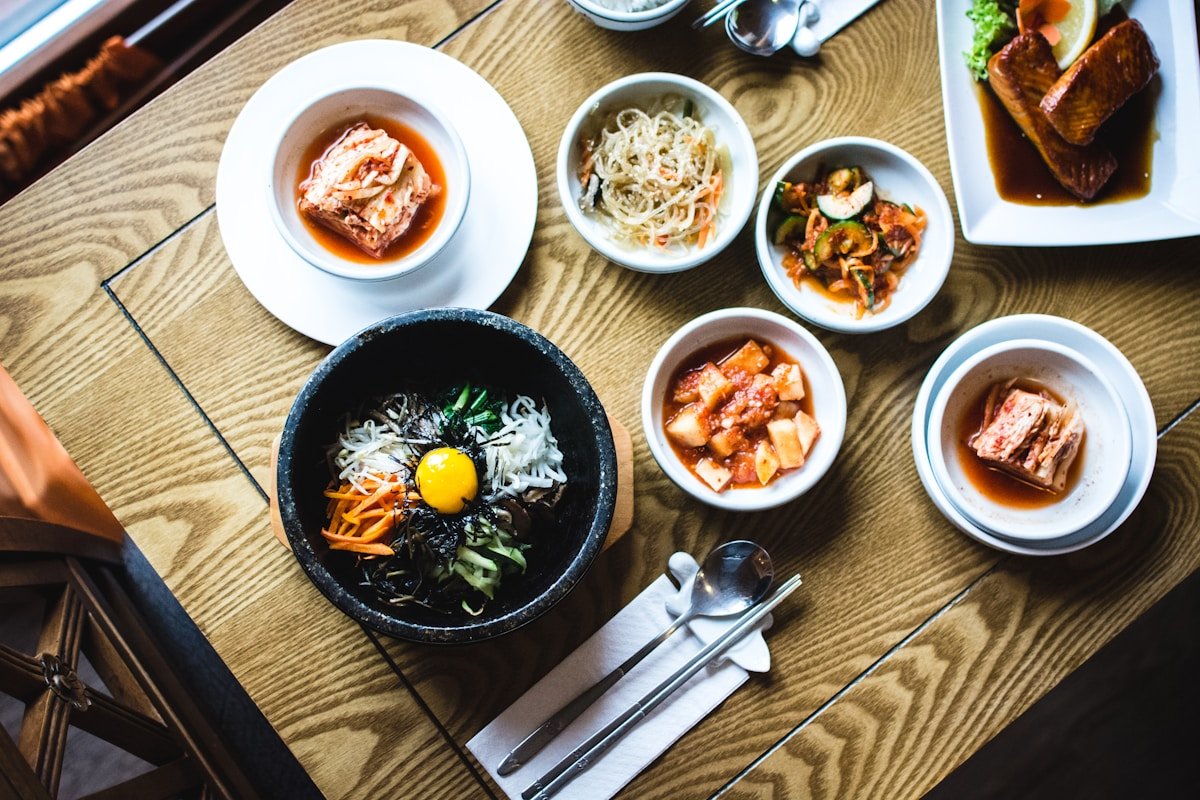
- Skimping on banchan: These complimentary side dishes are central to Korean dining culture. Serving weak, limited banchan will draw immediate criticism from Korean diners.
- Inauthentic gochujang/gochugaru: Don’t substitute generic chili paste for authentic Korean fermented products. The flavor difference is immediately apparent.
- Poor meat quality for KBBQ: Premium proteins at KBBQ justify the price point. Serving mediocre beef at KBBQ prices destroys the value proposition.
Frequently Asked Questions
How much does it cost to open a Korean BBQ restaurant?
KBBQ is the most expensive Korean restaurant concept — expect $250,000–$600,000+ due to ventilation systems, tabletop grills, and larger space requirements.
Do I need Korean culinary training to open a Korean restaurant?
While formal training isn’t legally required, deep knowledge of Korean cuisine — especially fermentation, kimchi-making, and KBBQ techniques — is essential. Hire an experienced Korean chef if you don’t have this background yourself.
How long does it take to open a Korean restaurant?
Plan for 12–18 months for KBBQ (ventilation permitting takes extra time), or 6–12 months for simpler Korean concepts.
Is Korean BBQ a profitable restaurant concept?
Yes — KBBQ consistently achieves above-average revenue per table through high per-person spend and social dining patterns that encourage large groups and repeat visits.